Nate Dawg hitting a heavy dead with a belt.
Wrist Wraps, knee sleeves, belts and shoes, oh my!
If you’ve read my earlier posts on weightlifting, you have now heard my rants and have hopefully decided to lift more often! You now may be wondering what gear you’ll to make the most of your training. While naked Wednesdays have yet to take off at MBS, here are a couple of things you’ll find people wearing (in addition to clothes) while lifting, and why. Some lifters have and use a lot of accessories while others use very few. I’ve used all of these in some form or another throughout my lifting career and I’ll share my opinions and experiences and let you make your own decision on what works for you.
Tape:
Hand care is very important for my lifting. Torn hands makes training very difficult so I need to make sure I protect my hands so that I can train properly. The amount of lifting with hook grip and chalk I do is pretty hard on the ol’ thumbs. So in addition to my callouses I wear tape on my thumbs and sometimes other fingers if I’ve got a tear. Some people like athletic tape, some use rock tape or, stretchy athletic tape, I personaly use finger protection tape. I find athletic tape is too ridgid and I can’t bend my thumb the way I want to and often feels like I’ve cut off circulation. Same with the rock tape. Plus I hate the sticky residue it leaves on my thumb nail. It can also stop sticking and start slide off while I lift and it’s distracting. Stretchy athletic tape is really soft and comfy, and sticks to itself well with no residue. However due to the hook grip it really starts to slide off my thumb and is distractly annoying to me. I like the finger protection tape because it sticks to itself so I can make a nice cast of my thumb but the threads are thin enough that I can break it in for my thumb to bend. While it does slide, it’s less and thus less distracting plus there is not adhesive glue so no sticky mess either. While this is my favorite, I am the only one I know who uses it. Had I not bought a dozen rolls on Amazon (thinking it was stretchy athletic tape), I may not have stuck with it. Try some out and see what works for you! Just a heads up if you do plan on competing in USAW sanctiton meets you can tape your entire thumb, but the tip must be exposed.
Straps:
Straps are a common tool used among weightlifters to help improve grip and save your hands when you are doing lots of barbell training. Straps are most often used when snatching or doing pulls, deadlifts, rows etc. Do not wear straps in the clean! While many lifters use them during regular training of snatches, just a small word or warning. While it is completely acceptable while training they are not allowed in competition, and can give a false confidence when going after big weights. However these are great when you have to train and your hands are big wrecked or when doing heavy pulls. They are good to have on hand when needed just make sure you aren’t dependent of them.
Wrist Wraps:
This can be everything from long thin cloth wraps, or more hard core velcro wraps. Either way the idea is to compress and or support the wrist. I do remember when I started CrossFitting and lifting my wrists aching a little bit during workouts. Like most 24-25 years old, ignored it hoping it would go away and for the most part it did! Also in 2008 finding this stuff (or even knowing it exsisted) was a lot harder than is today. Was this smart? Will this work for you? I don’t know. Aside from my first few months of CrossFit and then jamming my wrist and bruising the bone in a lazy clean, I’ve never really had wrist pain, and when I had the pain wraps did nothing for me. That was MY experience, yours may be different. Since most of us have jobs and hobbies that have us spending a lot of time at a desk and/or computer, I gernally recommend holding off on wraps and let yourself see how you adjust to training. If you do spend most of your life in the prone typing position, it may be uncomfortable at first and get better like it did for me. That being said some of you may want to get the wraps sooner especially if the pain is impeding your workouts and your daily life activities. Pain or no pain/discomfort you’re going to want to do mobility! In the form of Rossiter, flossing, banded stretches, massage, etc.
Knee Sleeves and Wraps
Again you can go oober thick and compressive or light and stretchy. Knee sleeves are to offer compression and warmth. If you have compromised stability in the knee due to damage or torn ligaments, a little neoprene isn’t really going to do much. But he compression, warmth can help with pain by keep in the joint warm, aiding in blood flow and patella movement. I wore knee sleeves for awhile to see if they would help my knee pain. While it felt strange to lifting without them after using them for a few months, I couldn’t find a correlation to any benefits. I still had pain due to some mobility issues and poor movement patterns, and thus opted to go without them, again this was MY experience. That being said, I do like to wear my knit pair in the winter. It really helps to keep my legs and knees warm on those cold days in the gym. There’s also a video of Dmitry Klokov (one the world’s greatest lifters from Russia) in one of his seminars, he warns about the thick non breathable sleeves leaching your joints of important minerals like magneesium and calcium due to excessive sweating. He recommends breathable wraps or sleeves.
Belts:
Some won’t lift without one, while others refuse to ever use one. I have used one from time to time, and now mostly for super heavy loads. I was having a lot of back pain last summer and I was used a belt to get through nationals. It didn’t make the pain go away, but I liked the tight feeling and perceived it as support in my lifts. Was it really helping, I don’t know nor do I care, I thought it was helping me and that’s all I cared about. I personally try not to use one I’d rather learn to use and build my core and back. However if I’m nervous in a heavy back squat, I may use one (it’s like a hug for my squat!). There are velcro belts, leather with buckles, some are very rigid, others are soft, and come in various widths for support, preference is up to you. For those looking to compete belts over 12cm are not allowed. Some of you may really like and find benefit from using a belt and that’s great! My recommendation would be to mostly use them with near max weights, and less for light or warm up weights. Plus we could all benefit from some additional specific core strengthening exercises.
Shoes:
If you CrossFit 5x a week and/or squat regularly you absolutely should have a pair of weightlifting shoes in addition to your normal workout shoes. Why weightlifting shoes? The elevated heel helps ankle range of motion, which allows you to hit lower depth in your squats. You get a better stretch reflex in the legs and you can move more weight. The hard heel is stable and allows you to not waste any force you exert into the ground into the squish of a running shoe, allowing for more useful power. You’d be surprised how much wiggle normal shoes have when you’re under load. Heavier weights and more power makes you stronger (remember all the strength benefits from my earlier post?). There are tons of shoes to chose from and have varying price points. Reebok, Nike, Adidas. Risto, Again Fatster, Pendlay, DoWin and more all offer shoes. Reebok has the hybrid type of shoe which has a more flexible toe and is nice when you have workouts with a heavy lift or squat but also a gymnastics movement like burpees and box jumps. I personally like to only weightlift in my weightlifting shoes, and CrossFit in my nanos to keep my ankles lose and used to squatting with and without a heel. You have have more mobility issues with your squat and may have certain workouts where a weightlifting shoe will be very helpful, up to you and your goals. If you are worried about the price point, think of them as an investment. My first pair of weightlifting shoes lasted over 5 years and were very well loved and abused. Also I don’t recommend deadlifting in your Oly shoes (clean and snatch grip pulls/deads are ok). The hard elevated heel is great for squatting, but will put you too far over the bar for deadlifting.
Singlets:
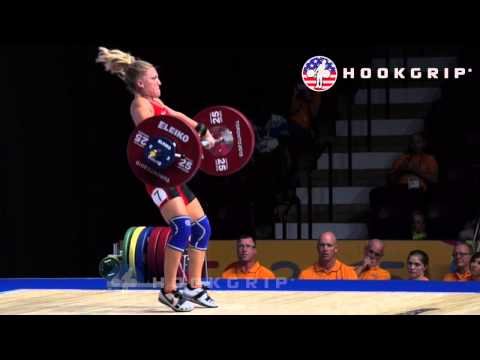
Singlets are worn mostly in competition and are so judges can see joints and bar path (and to keep the crowds coming back for more!). Some lifters like to train in their singlets or some kind of tight compression gear so you don’t create any extra drag or friction by getting caught on short or sweat pants, and keep muscles warm and aid in recovery. If you are competing in a USAW sanctioned meet you will be required to wear a singlet, if you are competing in a non sanctioned meet, any clothing you are comfortable lifting in is acceptable. If you are my brother or father, please never wear a singlet.
As you can see you can really geek out of weightlifting gear and accessories. There are tons of options out there, and lots of people using them. Aside from the tape all of these items will last you a very long time and you will get your money’s worth. Plus if it allows you to lift better, with less pain this seems worth it no? Where do you get these goodies? There are lots of sites that offer many of not all of these items. Rogue, Again Faster, MDUSA, Amazon, Hookgrip, are among the many places to start looking for gear. If you have any questions shoot me a line at
meriah@mbscrossfit.com!